Top Shelf THCA Flower: What Separates Premium From Mid-Range

Picture two jars sitting side by side. Similar price, same “premium” tag on the label. One is genuinely great, and the other is just okay. This guide shows you how to tell which is which. We’ll look at genetics, the grow, trim, cure, smell, lab reports, and price, and there’s a short checklist at the end you can screenshot.

Researchers at the University of Colorado Boulder bought 178 flower products off dispensary shelves and tested them. 

About 44% missed the state’s potency accuracy standard, and most of those misses came in lower than the label claimed. The results ran in Scientific Reports in 2025.

So think about what that means when you’re shopping. That big percentage on the front of the jar? 

“Top shelf” doesn’t help much either, because nobody regulates it. A seller can put it on anything, leaving you to do the homework of figuring out where to look.

What “Top Shelf” Really Means?

The phrase started at dispensary counters. The best jars went up high, at eye level, with the fattest price tags. It was never an official grade, just a way to point to the good stuff.

Online, it got stretched. 

A few brands earned it, but plenty of others use it for anything that tests above 25% THCA. 

Here’s the short version of what real top-shelf THCA flower needs: strong genetics, a grow someone paid attention to, a slow cure, clean lab results, and fresh stock. Lose one of those, and you’re holding a mid-range jar with good marketing.

Besides, mid-range doesn’t mean poor quality. Plenty of people smoke it every day and are perfectly happy. It just cuts corners somewhere, usually on time or labor.

Factors to Check Before Your Next Top-Shelf Purchase

#1 The Grow Room

Most THCA indoor flower is grown in rooms where the cultivator decides everything. Light, temperature, humidity, airflow. No surprise hailstorm in August, no heat wave in the middle of flowering. That tends to give you tighter buds, more resin, and fewer weird swings between batches.

But “indoor” on a label proves less than people think. A rushed room running tired genetics makes average flower, just at a higher price. A careful greenhouse grower can easily beat it. So when you’re comparing THCA indoor flower, count the growing method as a hint and keep looking. Is there a named cultivator? A harvest date? Real batch info? That’s what tells you someone cared.

Genetics and the “Exotic” Tag

Genetics set the ceiling. You can’t coax a wild, layered terpene profile out of a plant that never had one.

That’s where “exotic” comes in. Exotic indoor THCA flower usually means a rarer cultivar, a loud or unusual smell, deep color, or a small run that disappears in a week. It’s not a real tier, though. Plenty of mid-range jars wear the word, and some plain-looking strains beat their fancy neighbors.

Here’s a quick test:

Does the listing name the cross? Does it describe the smell in actual words, and show a clear photo of the actual bud? Good. If all it says is “exotic fire,” you’ve learned nothing.

Trim and Structure

Pick up a bud, or look closely at the photo. Premium flower is dense but not rock-hard. It’s covered in trichomes, and there’s barely any leaf sticking out. Much of that comes from hand trimming. Someone with small scissors takes off the sugar leaf and leaves the resin heads alone. A trimming machine is quicker and cheaper, and it also rubs off resin and leaves things ragged.

Mid-range jars tend to be a mixed bag of sizes with extra stem and a flatter look. You’ll also find small, airy “popcorn” buds that grow low on the plant where light barely reaches. They smoke fine. They just don’t earn a premium price.

The Cure Nobody Photographs

This is the step shoppers never see, and it matters a lot. After harvest, a good grower dries the plant slowly, often 10 to 14 days, then seals the buds in containers and checks humidity repeatedly. Many aim for around 58 to 62% relative humidity.

A good cure keeps the terpenes and smooths the smoke. A rushed cure leaves a hay smell, a scratchy throat, and flavor that dies after one pull. It’s also a big reason premium costs more. Time is money, and a room full of curing flower isn’t growing the next crop.

Smell, Taste and Burn

You can’t smell a jar through a screen. But you can read how the brand describes it, then test that description when the order shows up. Good flower has layers. Maybe citrus on top with fuel underneath, or berries over something creamy. Crack a bud open and the smell should get louder.

Bad signs are pretty easy to spot. Grass or hay means it was dried too fast. A sharp chemical note is worse. Dust at the bottom of the bag says old or too dry. If every pull is harsh and the taste disappears after the first hit, the cure or freshness let you down.

Reading the Lab Report – Quick Insight

The COA, or certificate of analysis, is where the marketing has to stand up. Open it before you buy. You want a batch number that matches your product, an accredited outside lab, a recent test date, the full cannabinoid breakdown, and passing results for microbes, pesticides, heavy metals, and mycotoxins.

Do a little math while you’re there. THCA turns into THC when it’s heated, so you must look at the total THC. That’s THCA multiplied by 0.877, plus any delta-9 THC already in the flower. So 28% THCA is not 28% THC. It’s closer to 24.5%.

Remember, A big potency figure is where you start, not proof of anything. The terpene section of a COA tells you more about a flower’s character than the THCA percentage will. Top shelf THCA flower often tests high, sure. Plenty of weak jars do too.

Premium vs. Mid-Range in Short

Premium usually means named genetics, a controlled indoor room, hand trimming, a long slow cure, big uniform buds, a layered smell, and a full COA with terpenes. 

Mid-range tends to mean common or unnamed genetics, any growing method, machine trimming, a faster timeline, mixed bud sizes, a milder smell, and a basic potency test. And the price follows.

Why Premium Costs More

It isn’t only about strength. Hand trimming eats hours. Long cures slow everything down. Small batches mean fewer jars to spread the costs across. Careful producers also toss lots that fall short of their own standards, and that loss gets built into the price.

Is it worth it? Depends on you. If you smoke every day, a good mid-range jar might be the smarter move. If you want the best flavor for a slow Sunday or a special night, premium pays off. Neither is wrong. 

The mistake is paying a premium for a jar that only has the label, with nothing in the lab report, the smell, or the bud to back it up.

Mistakes Buyers Keep Making

1. Chasing the highest number: A jar at 31% THCA with no terpene data and a vague listing is a gamble. A 25% jar with a full COA and a clear cultivator is usually the safer pick.

2. Trusting photos too much: Lighting can make almost anything look frosty, and some stock images are used across half a dozen products. Look for the same bud shown from a few angles.

3. Skipping the date: Flower isn’t wine. It doesn’t get better in the bag. If a seller can’t tell you when a batch was packed, treat that as an answer.

Freshness and Storage

A great harvest still fades. Air, heat, and light strip terpenes, so a jar packed months ago can taste flat no matter how good the grow was. Ask when it was packaged. Buy from sellers who turn inventory quickly.

At home, keep it simple. Store it in an airtight glass jar somewhere cool and dark, and don’t open the lid more than you need to. Do that, and your jar holds up far better than one sitting on a sunny counter.

Quick Buying Checklist

Before you spend on any listing tagged THCA flower top shelf, ask yourself:

  • Is the COA current, and does it match this exact batch?
  • Does the listing name the strain and the cultivator?
  • Are the photos real buds, not stock images?
  • Is the harvest or packaging date recent?
  • Does the seller describe smell and effects in specific words?
  • Can you reach an actual person if something shows up wrong?

Mostly yes? Good sign.

Final Thoughts

Top shelf is something you can check, not a title a seller gives itself. Look for genetics, a controlled grow, hand trimming, a patient cure, and a clean COA. When they line up, the price makes sense. When they don’t, you’re paying for a word.

Want to see these standards in action? Browse Good THCA’s best THCA flower collection and read the batch lab reports before you decide. Must be 21 or older to purchase.

FAQs: Top Shelf THCA Flower

1. What is top shelf THCA flower?

Top shelf THCA flower refers to cannabis flower marketed as premium quality. Factors often associated with premium flower include carefully selected genetics, proper growing conditions, a slow cure, good freshness, and transparent third-party lab testing. The term “top shelf” is not a regulated quality grade.

2. How can you tell if THCA flower is high quality?

Look for clear strain information, a recent harvest or packaging date, detailed product photos, and a certificate of analysis (COA) from an independent laboratory. Check that the report matches the product batch and includes cannabinoid potency and contaminant screening results.

3. Is indoor THCA flower better than outdoor-grown flower?

Not necessarily. Indoor cultivation allows growers to control factors such as temperature, lighting, and humidity. However, overall quality also depends on genetics, cultivation practices, harvesting, trimming, curing, and storage. Well-grown outdoor or greenhouse flower can also be high quality.

4. Does a higher THCA percentage mean better flower?

No. A higher THCA percentage does not automatically indicate better quality, aroma, or flavor. Terpene content, freshness, cultivation practices, and laboratory results are also important factors to consider when comparing products.

5. How should you store top shelf THCA flower to maintain freshness?

Store THCA flower in an airtight container in a cool, dark, dry place, away from direct sunlight and excessive heat. Avoid frequent exposure to air and humidity fluctuations to help preserve its quality and aroma. Keep it securely away from children and pets.
Is Budget THCA Flower Worth Buying?

This guide explains what cheap THCA flower is and how it compares to premium buds. The blog also explains when it makes more sense to buy budget THCA flower, how to safely purchase THCA flower online, and why buying in small quantities saves money.

A 2022 consumer poll covering 1,000 U.S. cannabis users found that THC level and price were the two biggest factors in what people bought. Around 60% put THC level at the top.

So most buyers want two things: strong flower and a fair price.

Then why does cheap THCA flower make people nervous? Because a low price makes you wonder: 

  • Is it old? 
  • Is it weak? 
  • Is something missing from the lab report?

Sometimes the worry is fair, but often it isn’t. A lower price can mean smaller buds or a simpler grow, with the same plant underneath.

In this guide, we explain what budget flower is, where it holds up against premium, and where it doesn’t. We also share a short checklist for buying safely online.

What Does “Budget” Actually Mean for THCA Flower?

Budget THCA flower gets its name because it costs less than top-shelf flower for a few common reasons.

1. Smaller buds: 

Smalls come from the same kind of harvest as full-size buds. Trimmers sort them by size, and they’re priced lower because they look less impressive in the jar.

2. A different growing method: 

Greenhouse and outdoor flower cost less to grow than indoor flower because sunlight does some of the work that lights and climate control would otherwise do.

3. Simpler genetics: 

Budget THCA flowers are often easier to grow in volume, which keeps the cost per gram down. This is another reason ‘budget’ flowers can deliver the same experience at an affordable price.

4. Less bag appeal: 

The buds might be lighter, less dense, or less colorful. That changes how the jar looks more than how the flower works.

None of these automatically means a weak or unsafe flower. They mostly mean the grower spent less on looks and labor.

Budget vs. Premium: What Actually Changes?

Here is a quick side-by-side to make the difference easier to see.

Budget Flower

Premium Flower

Looks

Lighter, looser buds

Dense, colorful, heavily frosted

Aroma and Flavor

Good, often milder

Louder, more layered

Potency

Solid, usually low to mid-range

Often the highest on the menu

Smoothness

Can be a little rougher

Typically smoother

Price

Easier on the wallet

Higher


Overall, the gap is mostly in the experience, not in whether the flower works. Premium flower smells stronger and burns more smoothly. Budget flower still does the job.

On our menu, the Good THCA Flower tier tests around 21% THC, while the Best THCA Flower collection runs closer to 28-31%. That is a real gap. Still, 21% is a strong, fully active flower for most people.

When Budget THCA Flower Makes Sense

Budget flower fits a lot of situations. Here’s a list of the ones where it works best:

  • Everyday use: If you smoke often, the savings add up fast. Paying top-shelf prices for a daily session is hard to justify.

  • First-time buyers: Trying a new strain? A lower-priced jar means less lost if it isn’t your thing.

  • Lower tolerance: Not everyone wants 30% flower. A mid-range strain is easier to pace.

  • Cooking and infusions: Heat burns off a lot of the aroma, so the flashy terpene profile of premium buds matters less here.

  • Rolling your own: You grind it up anyway, so bud shape makes no difference.

Still working out what you like? Our beginner’s guide to THCA flower strains is a good place to start.

When It’s Worth Spending More

Budget flower isn’t the answer every time. Spending more makes sense in a few cases, namely:

  • You care about flavor, and premium strains tend to have louder, more layered aromas.
  • You want a smoother smoke; better curing and denser buds usually mean less harshness.
  • If you want the highest potency, top-tier strains test higher.
  • If you’re gifting or sharing, looks matter more when someone else opens the jar.

For a middle ground, the better THCA Flower collection offers indoor-grown, top-shelf buds for less than the highest tier.

Cheap THCA Flower Smalls: The Easiest Way to Save

Want the biggest savings for the smallest compromise? Look at cheap THCA flower smalls in our collection.

Smalls are smaller buds that come from the same harvest as full-size flower: same plant, same curing, same lab testing. Only the size is different.

Wonder why they cost less? Because shoppers pay for looks. Smaller buds don’t photograph as well, so they’re priced lower.

For the buyer, that works out nicely. You get a similar experience for less money. Potency can shift a little from batch to batch, so check the lab report for the exact jar you pick.

Our THCA flower smalls collection is built around this idea. For more detail on how smalls are sorted and graded, read our full guide to THCA smalls.

Common Myths About Cheap THCA Flower

A lot of the hesitation around cheap THCA flower comes from a few ideas that sound right but don’t hold up. Here are the ones we hear most.

1. Cheap means old: 

Price doesn’t tell you the harvest date. Freshness shows up in the packaging, the test date, and the smell when you open the jar.

2. Smalls are just shake: Smalls are whole, intact buds that came out smaller. Shake is loose leaf and bud fragments, which is a different thing.

3. Higher price means higher potency: Not always. A mid-priced strain can test above a pricier one, which is why the lab report tells you more than the price tag.

4. Budget flower won’t get you high: Once heated, THCA converts into THC, so a 21% flower is still fully active. It just isn’t the strongest option on the menu.


Basically, price tells you how the flower was grown and sorted. The lab report tells you what’s actually in it.

How to Buy THCA Flower Cheap Online Without Getting Burned

Looking to buy THCA flower cheap online? The internet makes it easy to find low prices. It also makes bad flower easy to find. A few checks keep you safe.

A Certificate of Analysis for the exact batch:

A legitimate vendor always provides a third-party laboratory report. Make sure to verify that the Delta-9 THC content is below 0.3% and check for the report on pesticides and heavy metals. You can see how it works on our Lab Reports page.

Clear strain and potency details: 

It is important for the product page to contain information about strain name, strain type, and THC percentage. Lack of this information is often an alarming signal.

Freshness of the strain:

Old flowers lose their fragrance and become pungent. Choose products that come in fresh, sealed packs with a recent testing date.

Genuine Descriptions: 

Stay alert for offers that promise premium-quality products at bargain-basement prices. They may just be too good to be true.

Overall shipping costs: 

A cheap jar stops being cheap once you add shipping. A free shipping threshold, like our free shipping on orders over $100, helps.

Your state’s rules: 

The 2018 Farm Bill allows hemp flower under 0.3% Delta-9 THC, but some states set their own limits.

Remember, a low price is fine as long as the testing is still there. If the lab report is missing, skip it.

Our Pick for Budget Buyers: Good THCA Flower

Looking for cheap THCA flower you can actually trust? Our Good THCA Flower collection is built for exactly that. We hand-trim every batch, slow-cure it, fresh-seal it, and third-party lab-test it.

The lineup includes Apple Scotti, Blizz Queen, Gelato 33, and Joker’s Candy, with indica and sativa hybrids to choose from. Stock rotates, so check the collection page for what’s available right now.

Once you know what you like, you can always step up to Better or Best.

Bottom Line

So, is budget THCA flower worth buying? Yes, just as long as it’s been tested and is fresh and properly described.

Lower cost often means smaller buds, easier cultivation, or less eye-catching packaging. This does not automatically indicate inferior product. Don’t pay more if you won’t really notice the difference.

FAQs

Q. Is cheap THCA flower good quality?

It is possible. Quality isn’t determined by cost, but by testing, freshness, and treatment. Make sure to review the lab report first.

Q. Is budget THCA flower weaker than premium flower?

Not necessarily. Expensive flowers sometimes do measure up, but wide affordable varieties rank very well in the middle range.

Q. Are cheap THCA flower smalls worth it?

For most people, yes. Smalls come from the same harvest as full-size buds and cost less because they’re smaller. Just check the batch’s lab report first.

Q. How do I buy THCA flower cheap online safely?

Stick to vendors that offer a Certificate of Analysis (COA) per batch, detailing the strain and THC content. Make sure to verify your state laws before purchasing.

Q. Is cheap THCA flower legal?

Price has nothing to do with legality. Hemp flowers permit legal production when the Delta-9 THC is below 0.3% dry weight. Nonetheless, state laws differ, so you should know more before purchasing.

Q. Which is better for beginners, budget or premium flower?

Budget, in most cases. It lets you try a few strains without spending much while you work out what you like.

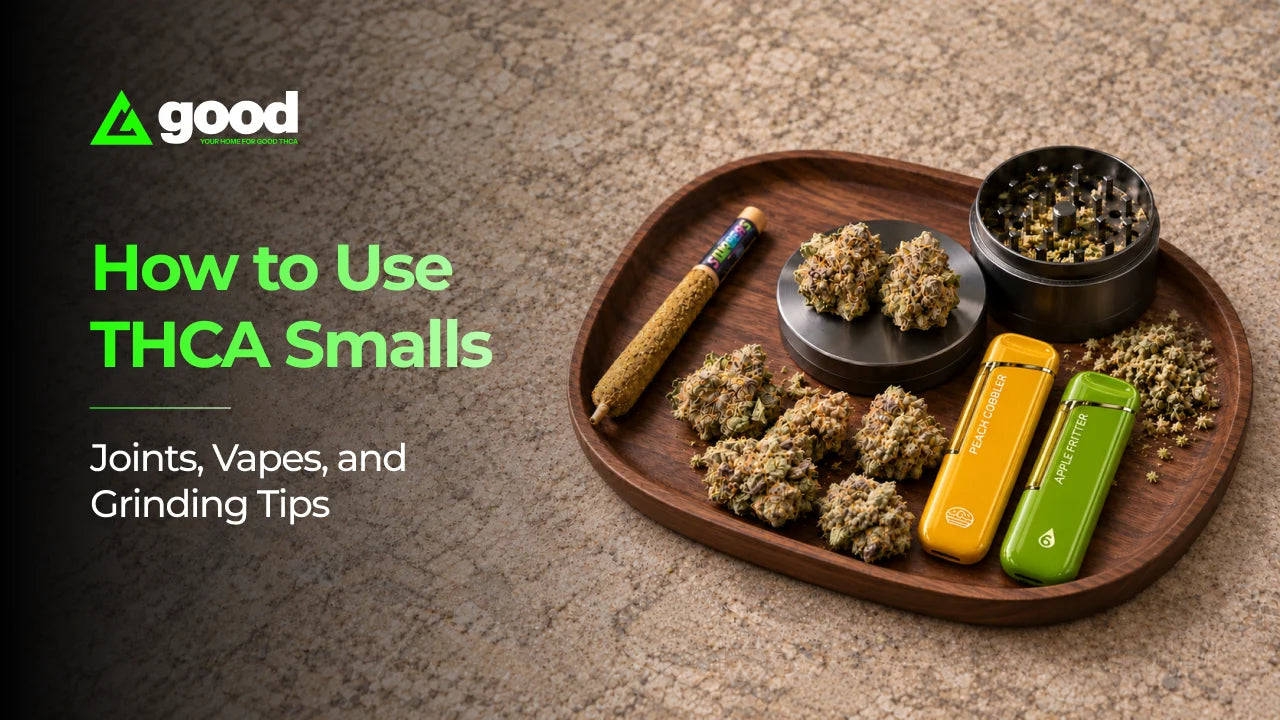
How to Use THCA Smalls: Joints, Vapes, and Grinding Tips

This guide shows you how to consume THCA small buds simply. It covers grinding, rolling joints, and even vaporizing. The guide also answers the question, “Are THCA flower smalls real?” It also compares small buds with the best THCA vaping options.

A study published in the Scientific Reports journal by CU Boulder researchers in 2025 found that about 44% of the flower products examined in 52 Colorado dispensaries bore an inaccurate THC label compared to the actual lab value, and most of the values were high.

So before you worry about how to use small buds, it’s fair to ask if they’re legit in the first place.

Wonder why smalls get that question so often? 

Because they cost less and look different from photos of full-size buds, people often wonder what’s wrong with something cheaper. However, nothing’s generally wrong with the batch.

Once you know the batch, learn how to use small buds for a great experience. This guide covers the basics of shopping for THCA smalls, including how to spot a legit batch, grind and roll smalls, use them in a vaporizer, and compare them to a THCA vape.

Are THCA Small Buds Legit?

Yes, when they come from a seller that tests every batch. Smalls are small buds from harvests similar to bigger buds, and they’re sorted by size only during trimming. For the full breakdown of how that works, read our guide to THCA flower smalls.

A bud’s size doesn’t make a batch legit or fake; the testing does. Here is a quick way to tell the difference:

What to Check

A Legit Batch

A Red Flag

Lab report

A COA for that exact batch

No COA, or one that doesn’t match the product

The buds

Whole buds with visible trichomes and a clear smell

Crumbly, brown, or musty buds that look like trim

The listing

Strain name, strain type, and THC percentage

Missing details or vague descriptions

Packaging

Fresh-sealed, with a recent test date

No seal and no date

Price

Lower than full-size flower, but believable

Far below the market with no testing to back it up


Given what the CU Boulder study found about labels, the lab report matters most. It’s the best way to check the label instead of just trusting it. 

Hemp flower is also federally legal under the 2018 Farm Bill when Delta-9 THC stays under 0.3% by dry weight, but some states set their own limits, so check yours before you order.

Grinding Tips for THCA Smalls

Grinding may seem obvious, but people often grind smaller buds incorrectly. Because the buds are already small, it’s easy to overgrind them. Some tips below will help with that.

Grind just before you are going to use it:

After grinding, the smell disappears fast, and the flower starts to dry out quickly. So it is better to grind only what you are going to smoke in one sitting.

Don’t do it excessively: 

Coarse sea salt, rather than flour, is a good comparison here. Three or four turns are enough, because more ground marijuana burns too quickly and can clog your bowl screen or a vaporizer.

Use grinders with a kief catcher: 

Smaller buds have more trichomes, and the bottom chamber collects the sticky residue. Later, you can sprinkle it on top. Don’t have a grinder? Just use your hands. Break the buds into small, evenly sized pieces. This method is slower but effective.

Clean your grinder occasionally: 

Resin builds up over time and can cause the teeth to stick together, making the next grind harder.

Overall, smalls only need a light touch.

How to Roll a Joint With THCA Smalls

A joint is the most common way to use smalls, and it’s easier than it looks. Smaller buds break apart quickly, so there’s less prep before you start rolling. 

Here’s how to do it, step by step:

Step I – Grind your smalls

Grind your smalls into smaller pieces. Don’t make it too fine, or it’ll turn into a powder.

Step II – Roll a filter tip

Create a filter from a strip of card and attach it to one end of the paper. This holds the flower together and makes it easier to handle.

Step III – Spread along the paper

Place the flower on the paper, distributing it slightly more densely near the filter. Ensure the flower stays loose so air can flow for even burning.

Step IV – Shape the paper

Fold the paper into a shape with your fingers by pinching and rolling it. Then fold the edge inside and roll it up while moistening the strip.

Step V – Pack and enjoy

Compact the open end using a pen or some stick, twisting it shut. Light the twisted end and rotate the joint to make it burn evenly.

A half-gram joint is plenty if you’re trying a new strain. Remember, it’s easy to roll another one later, and harder to undo a joint that was too big.

If rolling isn’t your thing, our guide to THCA pre-rolls covers the ready-made option.

Using THCA Smalls in a Vaporizer

A vaporizer heats the flower gently instead of burning it. It makes vapor, not smoke, but still uses heat to turn THCA into THC. This gives users effects similar to smoking. Small buds work well because they break apart easily.

Here are a few tips to help you enjoy a better session:

1. Grind your flowers a little finer than you would for a joint

2. Go with medium-fine bits, since they allow more even heat and give you more out of the same amount of flower.

3. Don’t pack the chamber full of flower; let it be loose to allow for free-flowing air inside it, because otherwise, you’ll be getting disappointing and weak hits

4. Check your device’s temperature settings to keep everything running smoothly, because some models can give different results. Stick to what the manual says instead of trying out your new gear.

5. Your experience will be less intense than with a joint. You will also get less smoke and odor, which many prefer.

Smalls or a Vape? Finding the Best THCA Vape for You

Some people don’t want to grind, roll, or pack anything. If that’s you, a vape might be a better fit.

A disposable vape is ready to use. You inhale from it; no grinding, rolling, or refilling required.

Here is a quick side-by-side.

Basis

THCA Smalls

THCA Vape

Setup

Grinder, papers, pipe, or vaporizer

None with a disposable

Portability

Moderate

High

Discretion

Lower, since flower has a strong smell

Higher

Cost

Usually lower per session

Usually higher

Control

You choose the exact amount

Puff by puff, less measured


Our THCA vapes collection includes disposables from brands like Cali Pure and Boutiq. No charging or refilling, and most run $30-$40.

So what makes the best THCA vape? While there is no right or wrong answer, there are a few things to consider before buying:

  • Check for authentic lab certification for the product.
  • Check the report for the strain, flavor, and potency at harvest.
  • Make sure the batch has been recently produced and is not leftover stock.

No matter which product you choose, don’t inhale a large amount of vapor at once. Take 1 or 2 puffs, then wait 10-15 minutes before inhaling again.

How to Store THCA Flower Smalls

The small buds THCA have more surface area relative to their size, so they can dry out a little faster than big buds. A bit of care at home keeps them smelling and smoking the way they did on day one. 

Here are a few simple tips for storing small cannabis buds at home:

a. Keep it airtight

Store your smalls in an airtight glass container as soon as you open the bag. Oxygen will suck moisture from the buds, making them brittle, so you must create a good vacuum.

b. Store in a cool, dry place:

Find a cool and dry place to keep the jar. A cabinet or drawer works well. High temperatures and sunlight can damage the smalls and degrade the terpenes.

c. Add a humidity pack:

A two-way humidity pack will keep the moisture level inside the jar stable. It is a must for people who live in a dry area.

Under the right conditions, smalls will stay potent and ready to use for several months.

THCA Small Buds at Good Farms

Our Small THCA Flower collection currently includes strains like Pinyatti, Hash Burger, Ice Cream Cake, Pink Certz, Blue Crack, and E85. They test at roughly 21% to 27% THC.

Every batch is third-party lab tested, and you can check the COA on our Lab Reports page before you order. Stock rotates, so check the collection page to see what’s available right now.

Bottom Line

So, how do you get the most out of THCA smalls? Grind them lightly, roll or pack them loosely, and store them in an airtight jar. And make sure the batch has a lab report, since that’s what makes them legit.

If you’d rather skip the prep, a vape is there for those days. Overall, smalls give you more flower for the money, and a vape gives you more convenience.

FAQs

Q. How do you use THCA smalls?

Most people roll them into a joint, use them in a dry-herb vaporizer, or pack them into a bowl. Grind lightly and right before you use them.

Q. Is THCA small buds legit?

Yes, when the seller publishes a batch-specific lab report. Smalls are real flower sorted by size.

Q. Do THCA flower smalls get you high?

Yes, once they’re heated. Smoking or vaping converts THCA into THC, which is what causes the high.

Q. Is a THCA vape better than smalls?

There’s no single best answer; it depends on what you want. Smalls usually cost less per session and give you more control. A vape is easier and more portable.

Q. What is the best THCA vape for beginners?

A disposable is usually the simplest option because it requires no setup, charging, or refilling. Check that the product has a lab report, and start with one or two small puffs.

Q. Are THCA small buds legal?

Federally, yes, when Delta-9 THC is under 0.3% by dry weight under the 2018 Farm Bill. State laws vary, so check yours before ordering.

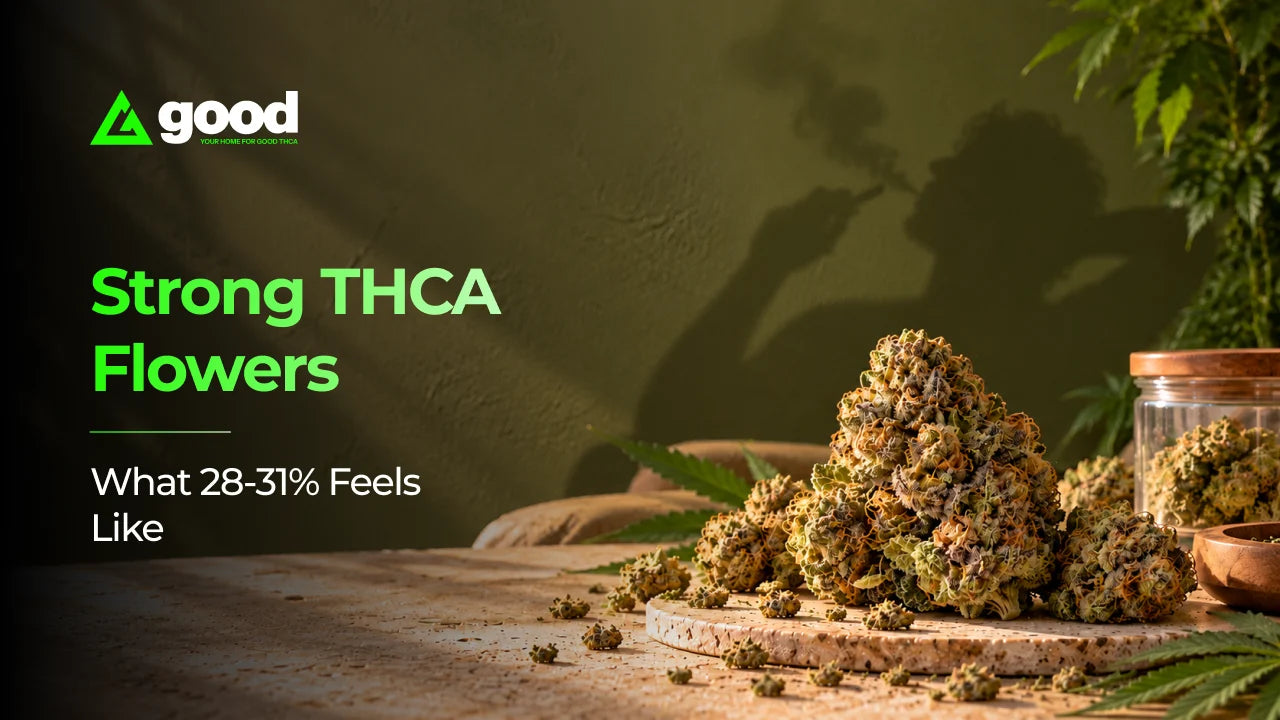
Strong THCA Flower: What 28-31% Actually Feels Like

This article dives into what makes THCA flower stand out and what a 28-31% strain actually feels like. It also tackles whether THCA flower will get you high and who the right candidates are for high-THCA flower. Let’s get started.

Stats from Headset’s point-of-sale data suggest that typical flower in most U.S. cannabis markets tests between roughly 22% and 28% THC. That’s an average product sitting around 25%.

So when a jar says 30%, it’s above the usual range.

Wonder what that actually feels like? Most buyers do. A percentage on a label doesn’t tell you how a session will go, and a jump from 21% to 30% can feel bigger than the numbers suggest.

There’s also a bigger question underneath. 

Does THCA flower get you high at all? 

It does, but only under the right conditions, and we’ll cover that first.

In this guide, we explain how THCA turns into THC, what 28 to 31% flower feels like in practice, who it suits, and how to start without overdoing it.

Does THCA Flower Get You High?

Yes, heating THCA releases chemicals that can get you high. Raw THCA flower can’t get you high on its own.

THCA is the acid form of THC in raw cannabis that does not make one high. Heat removes a part of this compound when one smokes, vaporizes, or cooks cannabis, hence turning THCA into THC. This is the compound that makes one get high.

Therefore, does smoking THCA flower get you high? The answer is yes because lighting up leads to immediate decarboxylation and is the reason why smoking THCA flower is akin to smoking cannabis.

One practical number is worth knowing. Roughly 88% of THCA is changed into THC during heating, so a flower testing at 30% THCA lands around 26% active THC once it’s lit.

For a deeper breakdown, read our guide on THCA vs. THC.

What Counts as Strong THCA Flower?

There’s no official line, but potency tiers make it easier to compare. Here is a rough guide based on typical market ranges and our own menu.


Potency

How It Compares

Who It Suits

Around 20 to 22%

At or just below the typical range

New buyers, lower tolerance

Around 22 to 28%

The typical range for most flower

Most regular users

Around 28 to 31%

The top end, true high THCA flower

Experienced users, higher tolerance


Our Good THCA Flower tier tests around 21%, while our Best collection runs from about 28 to 31%. That gap is exactly why this guide exists.

Both ends have their place, but the best option depends on your tolerance and what you want from a session.

What 28-31% Feels Like

Effects vary from person to person, so treat this as a general picture, not a promise. Strain type, body weight, tolerance, and whether you’ve eaten all play a part.

Here is what most people notice with strong flower:

1. Onset: Effects usually show up within minutes of smoking, and they tend to build quickly.

2. Intensity: The body feel or head feel is stronger than with 20% flower, and even a small amount can be enough.

3. Peak: Most people reach peak effects 30 to 60 minutes into the session. The effects usually wear off in 2 to 3 hours.

4. Side effects: Dry mouth and red eyes are frequent symptoms. Excessive usage in a single session could also result in dizziness, rapid heartbeat, or even anxiety.

The big difference with strong THCA flower is that you need much less. A session that took a full pre-roll at 20% might take only a few puffs at 30%.

What Changes How Strong Flower Hits You

Two people can smoke the same 30% flower and have very different sessions. Several things shape the outcome.

Tolerance: 

Frequent use can build tolerance over time, affecting how individuals experience it. Regular users may feel the cannabis mildly, while beginner users may feel it strongly.

Method of consumption: 

Smoking a joint requires consistent inhalation, while inhaling from a bowl or vaporizer makes it easier to regulate your intake with smaller puffs. If you prefer your flower rolled, our guide to THCA pre-rolls will help you know what to expect.

Type of strain and terpenes: 

Strain type and terpenes also affect the overall experience. For instance, Indica-hybrid and sativa-hybrid strains with the same percentages can affect users very differently.

Mood and food: 

Smoking on an empty stomach, or when you’re stressed or tired, can affect the experience.

That’s why a percentage is only a starting point. How you feel depends as much on you as on the flower.

Who Should Reach for High THCA Flower?

Strong flower suits some people better than others. It’s a good fit when:

  • You have a higher tolerance: Flower in the 20 to 25% range just isn’t doing much for you anymore.
  • You want to use less: A smaller amount of strong flower can do the work of a bigger amount of milder flower.
  • You know your preferences: You already understand how you react to THC and which strain types you like.

It’s better to wait when:

  • You’re new to THCA flower: Or you haven’t smoked in a long time.
  • You tend to feel anxious with strong THC: A milder strain is a safer place to start.
  • You’re not sure how your body reacts: Build up to it instead of jumping in.

New to buying THCA? Start with our beginner’s guide to THCA flower strains and work your way up.

How to Start With Strong THCA Flower

Moving from 21% flower to 30% is a bit like switching from a regular coffee to a triple espresso. You can absolutely enjoy it; you just don’t want to finish the whole cup in one go.

Here’s how a first session usually goes well:

  • Take one or two small puffs, and stop there.
  • Put the flower down and wait 10-15 minutes. The effects can keep building after you stop, so you’ll often feel more at the 15-minute mark than you did right after the last puff.
  • Take another puff only if you feel nothing at all, and if you do, go back to just one.

Where you start also depends on what you’re used to. Here’s a simple way to work it out.

You’re Used To

A Good First Move

Flower around 20 to 22%

Try the 25 to 26% range first, like our Better THCA Flower collection, before going higher

Flower around 25%

Try a 28%+ strain, but use about half of what you normally would

Flower at 28%+ already

Stick to your routine, but go slowly with any new strain


A few small things help too:

  • Don’t start a session on an empty stomach; eat something to avoid a hard experience.
  • Pick a spot you’re comfortable in, and ensure you have time for the experience. Avoid driving or operating machinery after the session.
  • You need to be 21 or older, so check your state’s rules before you order.

Strong flower is easy to handle once you give it a little time. Most of the trouble comes from reaching for more too soon.

Indica, Sativa, and Hybrid at the Top End

Potency isn’t the only thing that influences a strain’s effect. The strain itself matters, and the same guidelines apply to 30% as well as 20%.

Many high-potency strains are indica crosses, and they deliver heavier, more relaxed effects, so they work better in the evening. The sativa crosses like Blue Dream give a lighter effect, although the strain is nearly 29% THC in potency.

Best THCA Flower at Good Farms

The Best THCA Flower collection is where our strongest strains live. It features small-batch strains testing at around 28 to 31% THC. Our options include Grizzly Glue at about 31%, along with Blue Nerdz, Ghost Mode, LCG, and Blue Dream.

We hand-trim, slow-cure, fresh-seal, and third-party lab test every batch, so you can read the COA before you order. Stock rotates, and some strains sell out fast, so check the collection page for what’s available right now.

Want to step up gradually? Start with Good at around 21%, move to Better at around 25 to 26%, then try the best option.

Strong Isn’t Always Better: What to Check Besides the Number

A high percentage looks great on a label, but it isn’t the full story.

Terpenes: These define the taste and experience, so two plants at 30% can be quite different.

  • Lab report: Look into what the percentage relates to, and ensure you have the batch-specific certificate of analysis for Delta-9 compliance, pesticides, and heavy metals. What you need to check is available on our Lab Reports page.
  • Freshness: Old flowers don’t smell and don’t burn smoothly, irrespective of the percentage.
  • Smoothness: Proper curing becomes extremely important at this potency level.

A strong number may catch your attention, but a fresh, well-tested flower makes the experience worth it. 

Bottom Line

So, what does 28 to 31% feel like? Stronger and faster than most people expect, and a little goes a long way. And yes, it will get you high once it’s heated, which is exactly what smoking does.

If you already have the tolerance and want a bigger effect from less flower, high THCA flower is worth trying. If you’re still learning, step up slowly.

FAQs

Q. Does THCA flower get you high?

Yes, once it’s heated. Raw THCA is non-intoxicating, but heat converts it into THC, which is what causes the high.

Q. Does THCA flower get you high if you smoke it?

Yes. Smoking heats the flower and converts THCA into THC almost instantly, so the effects are similar to smoking traditional cannabis.

Q. What is strong THCA flower?

There is no official definition, but flower testing at around 28% or higher is at the top end of the market. Typical flower tests are lower, at roughly 22 to 28%.

Q. How strong is 28 to 31% THCA flower?

It is strong enough that a small amount goes a long way. Effects come on within minutes when smoked and usually peak within the first hour.

Q. How long does strong THCA flower last?

The main effects usually settle down within two to three hours when smoked. How long it feels depends on your tolerance, the strain, and how much you used.

Q. Is high THCA flower okay for beginners?

Most beginners are better off starting with a milder strain, around 20 to 25%, and stepping up once they know their tolerance.

Q. Is stronger THCA flower always better?

No. Potency is only one factor. Terpenes, freshness, and a clean lab report matter just as much for the overall experience

THCA Pre-Rolls: Effects, Legality, and Best Options to Buy

Some days grinding flower just feels like too much effort. You want to light something and be done thinking about it, not hunting for a grinder that rolled under the couch three weeks ago. That’s where pre-rolls step in as a reliable alternative for users who want relaxation without much effort.

What Are THCA Pre-Rolls?

THCA pre-rolls are your go-to option if you want a great experience without the manual work. 

Put simply, they are ground THCA flower rolled into paper and ready the moment you pick them up. 

Pre-rolls are simple – no grinder, no rolling papers of your own, no setup.

Simply put, THCA pre-rolls are the same compliant hemp flower, pre-packed for a good experience.

This blog takes a closer look at the pre-rolls while walking you through some of the best guidelines to get started. 

Quick Insight – What THCA Is About

THCA is the raw, non-intoxicating form of THC found naturally in cannabis before heat ever touches it. 

Light the pre-roll, and that heat converts THCA into Delta-9 THC almost instantly through decarboxylation, the same process that happens with any flower once it’s smoked, whether that’s from a pipe, a bong, or paper. 

The rolling itself doesn’t change the chemistry. It just skips the ten minutes of prep that usually come before you can actually smoke.

For newer buyers still getting familiar with the category, it helps to know that THCA flower strains generally fall into three families: indica, sativa, and hybrid. A pre-roll is just one of those strains, already rolled instead of sold loose in a jar.

Pre-Roll Sizes, Dosage, and What’s Inside

THCA pre-rolls aren’t one-size-fits-all, and knowing what’s actually in the paper changes how much you should expect to feel per roll.

A few things worth checking before you buy:

  • Size: Most pre-rolls come in 0.5g, 1g, or 1.5g. Size is the first variable in the dosage math, since more flower means more raw THCA per roll.
  • Flower-only vs. infused: Straight pre-rolls are just ground flower. Infused ones are dusted with kief or coated in live resin or diamonds before rolling, which pushes actual THC well past what the base flower’s percentage suggests.
  • Filter tip: Also called a crutch, it’s a small paper or glass piece at the mouth end that keeps airflow steady and stops the last third of the roll from burning your fingers. Not every brand includes one.

Here’s how that plays out in actual numbers, using a 25% THCA flower and the 0.877 conversion factor:

Roll Size

Raw THCA Content

Estimated THCA after Combustion

0.5g

~125mg

~110mg

1g

~250mg

~219mg

1.5g

~375mg

~329mg


An infused version of any of these rolls will test higher than the table shows, since the added concentrate sits on top of the flower’s own percentage.

Two pre-rolls listed at the same THCA number won’t necessarily hit the same. Check whether it’s flower-only or infused before assuming.

Effects: What to Actually Expect

What you feel comes down to the strain rolled inside, just like with loose flower.

  • Indica-leaning pre-rolls run heavier and more physical. Effects settle into the body rather than the head, which makes these better suited to evening use or winding down after a long day.
  • Sativa-leaning pre-rolls lean brighter and more mental. Better earlier in the day, especially if you still need to stay functional and social afterward.
  • Hybrid pre-rolls land somewhere between the two. Most first-timers gravitate here since the effects rarely swing hard in either direction.

Quick Insight – What’s Right for You?

Hybrid pre-rolls sit somewhere between the two. Most first-timers land here since the effects rarely swing hard in either direction, which makes for a more forgiving introduction.

Onset is fast, minutes rather than the hour-plus wait that comes with edibles. Effects typically peak somewhere between thirty and sixty minutes in, then taper off gradually over the next couple of hours depending on how much was smoked and your own tolerance.

Note 

Pre-rolls burn continuously once lit, unlike a bowl you can tap out and set down mid-session. Pacing yourself matters more here than it might with loose flower packed in smaller amounts.

Pre-Rolls vs. Loose Flower

Pre-Rolls

Loose Flower

Prep Needed

None

Grinding, rolling

Portability

High

Moderate

Cost Per Session

Slightly higher

Lower

Dosing

Fixed per roll

Depends on how you pack

Best For

On the go, no fuss

Control over amount used


Neither format is objectively better. It really comes down to whether convenience or control matters more on any given day.

Multi-Packs vs. Singles – The Notable Difference

A single pre-roll is the lowest-commitment way to try a new strain you haven’t smoked before, since you’re only out one roll if it’s not for you.

Multi-packs make more sense once you already know a strain works for you and want to stock up without reordering every week. They usually work out cheaper per roll, though savings vary by brand and pack size. 

If you’re still exploring different THCA flower strains, starting with singles across a few strains gives you a better sense of what you actually like before committing to a bigger pack of any one of them.

Is It Actually Legal?

Yes, federally.

The 2018 Farm Bill sets the line at 0.3% Delta-9 THC by dry weight, measured in the raw, unheated flower before it’s ever smoked. Stay under that number, and it’s compliant hemp, whether it’s sold rolled or loose. Rolling flower into paper doesn’t change the number that determines legality.

State rules are less consistent, though. A handful of states restrict smokable hemp products specifically, pre-rolls included, even when the underlying flower is federally compliant on paper. 

That inconsistency is exactly why it’s worth checking your own state’s current stance before ordering, rather than assuming federal compliance automatically settles the question everywhere.

Quick Takeaway: 

Federal law covers the format either way, rolled or loose. A state-level check is still worth the two minutes it takes before you place an order.

Where Can I Buy THCA Pre-Rolls?

Online, and honestly, it’s usually the safer route too.

Look for three things before you order anything. A batch-specific Certificate of Analysis, not a generic percentage pulled from somewhere unrelated to what you’re actually buying. 

The strain name and THCA percentage listed clearly on the product page, not buried three clicks deep or missing entirely. Check for the latest test date, since stale flower loses terpenes fast, and a pre-roll that’s been sitting in a warehouse for months won’t smoke the same as one rolled recently.

When you walk into a random smoke shop, you rarely get to verify any of that on the spot. Online, with a vendor that actually publishes its testing, it’s right there on the page before you check out.

What We’d Recommend

Good Farms rolls its pre-rolls from the same lineup used across its flower collections, so the quality doesn’t drop just because the format changed from a jar to paper.

If pre-rolls are new to you, start with a hybrid strain. It’s the most forgiving first pick since the effects rarely lean too hard toward sedation or stimulation. If cost is more of a factor, pre-rolls made from THCA smalls are worth grabbing: same potency as full-size flower, lower price, and nothing about the product compromised in the process.

Every batch, regardless of strain or format, ships with its own lab report. What’s actually in the paper isn’t left to guesswork.

Bottom Line

A THCA pre-roll isn’t a lesser version of flower. It’s the same compliant hemp, the same lab testing, the same effects tied to the same strain you’d find loose in a jar. Just already rolled, so you can skip the part where you’re hunting for a grinder.

If convenience matters more than the ritual of breaking down your own flower, this format is built for exactly that.

FAQs

Q. What are THCA pre-rolls?

THCA flowers ground and ready to be smoked; no preparation required. Same cannabis compliant flower sold loose but just in paper form.

Q. Are THCA pre-rolls legal?

Absolutely, at the federal level, as long as it remains below 0.3% Delta-9 THC by dry weight in its raw state. Smokable hemp products might not be allowed in some states, so do check their regulations before placing your order.

Q. What’s the best THCA pre-roll to start with?

A hybrid strain, generally. The effects rarely swing hard toward sedation or stimulation, making it a forgiving first choice if you’re new to pre-rolls.

Q. Where can I buy THCA pre-rolls?

Online, from a vendor that publishes batch-specific Certificates of Analysis and lists the strain and THCA percentage clearly on the product page. Much easier to verify than buying from an unfamiliar shop in person.

Q. Do pre-rolls made from THCA smalls hit any different than ones made from full-size buds?

No. Potency comes from trichome density, not bud size, so a pre-roll rolled from smalls tests just as strong as one made from top-shelf flower off the same batch.

THCA Flower Smalls: Everything You Need to Know

Ever opened a jar and the buds came out to be smaller than the photo suggested? Well, it happens more than people expect, and no, you didn’t get shorted.

That’s THCA smalls. Once you know what they actually are, most people stop seeing it as a downgrade and start ordering them on purpose.

This blog explores more about smalls, including buying tips and insights to get you started.

What Are THCA Smalls, Really?

As the name suggests, THCA smalls are small buds from the same batch. These buds go through the same curing process as the big, photogenic buds in premium packaging. The only thing that changes is size, and size is decided during trimming, not during growth.

Here’s a closer look at how the sorting actually plays out: 

  • Once a plant’s harvested and cured, trimmers go through and separate buds by how big they turned out. 
  • The dense colas up top, the ones catching the most light, end up graded premium. 
  • Lower branches, smaller nodes, less direct light- those buds just don’t hit the same size, even though they carry the same genetic imprint as the ones above them. 

That’s what ends up in the “smalls” bag.

One thing worth clearing up early: 

Smalls aren’t shake, and they’re not trim. Shake is when the plant loses fragments during handling. Trim is the leftover leaf material cut away from the bud. Smalls are complete buds, just smaller.

Here’s a closer look at the difference between THCA smalls and a full-size flower.

THCA Smalls

Full-Size Flower

Cannabinoid content

Same batch, same numbers

Same batch, same numbers

Terpenes

Identical

Identical

Size

Marble to grape range

Bigger, more uniform

Price

Lower

Higher

Good for

Regular use, trying new strains

Gifting, bigger sessions

Bud Size Doesn’t Touch Potency

Cannabinoids live in trichomes, and those little crystal structures coat the surface of every bud, big or small.

A plant doesn’t route extra resin to its biggest buds and skip the smaller ones. Trichome density is a genetics and growing-conditions thing, applied across the whole plant at once. 

Sometimes a smaller bud that caught more direct light actually tests just as dense as the flagship buds beside it. So pull a lab report on smalls versus premium flower from the same batch, and the numbers are usually close in terms of content. 

Quick one to remember here: Potency tracks trichomes, not bud size.

Then Why Are They Cheaper?

The answer is simple: People buy with their eyes first.

Big, dense buds look better in photographs, and they fill a jar in a way that looks impressive. Smaller buds, chemically identical, just don’t carry the same visual pull, so vendors price them lower to move through the harvest. 

It works out well if you care more about what’s in the jar than how it looks sitting there. You’re paying less for the exact same plant. That’s really the whole story.

What to Actually Look For When Buying Smalls

Not every vendor’s smalls are worth buying, chemistry being identical or not. A few things separate a good batch from a lazy one. 

Here’s a closer look at the different aspects of the purchase:

1. Lab report first, always: Every batch, smalls included, should ship with a Certificate of Analysis. Cannabinoid content, Delta-9 compliance, clean pesticide and heavy metals screen. No COA for the smalls specifically? Walk away.

2. Moisture matters more than you think: Smaller buds have more surface area relative to their size, which changes how they hold moisture during curing. Packed too tight or stored badly, they’re more prone to mold than larger buds growing in similar conditions. A well-handled batch still looks frosty, still smells like something, and doesn’t come across dry or musty.

3. Don’t mistake cheap for low quality: Real smalls hold their shape as whole buds and still show visible trichomes. Crumbly, brown, falling apart before you even touch it? That’s the vendor cutting corners, not a knock against smalls as a category.

Smalls or Vapes, If You’re on a Budget

Smalls aren’t the only cheap way into THCA. Vapes are the other obvious route, and they solve a different problem entirely.

Smalls get you whole flower at a much more affordable price, which is great if you like grinding your own and packing a bowl or rolling something yourself. 

The best THCA vapes skip all of that. No grinder, no rolling, just draw and go, which matters more if discretion or portability is the priority over the process of using flower.

Cost-wise, flower usually stretches further per dollar since you’re not paying for hardware and extraction on top of the product.

But convenience is convenience, and your choice depends on what you’re actually optimizing for.

Where to Start?

Good Farms runs a dedicated Small THCA Flower collection built around exactly this idea: full potency, same testing standards as everything else on the site, priced for people who don’t want to pay extra just for bud size. 

Solid entry point if you’re newer to THCA and want to try a few strains before committing to full jars. Every batch ships with its own lab report. What’s in the bag isn’t a guessing game.

Bottom Line

THCA flower smalls aren’t a lesser product. Same plant, smaller package, priced lower because the market rewards how a bud photographs more than what’s actually in it.

If the effect matters more than the Instagram shot, smalls are one of the easier ways to stretch a budget further.

FAQs

Q. What is THCA smalls?
Smaller buds pulled from the same batch and plant as full-size flower during trimming. Same cannabinoids, same terpenes, just less bud weight per piece.

Q. Is that basically what THCA smalls means, or is there more to it?
That’s really it. Size-based sorting, no chemical changes.

Q. Can THCA smalls be considered the best THCA flower, or only full-size buds?
Smalls can absolutely count. Lab results from the same stock usually come back nearly identical between smalls and premium-sized buds.

Q. Worth it for someone buying THCA for the first time?
Yes, and it’s one of the better starting points. Lower cost, same effects, less risk if a strain doesn’t work out for you.

Q. Smalls or the best THCA vapes for someone on a budget?
Smalls stretch further per dollar since you’re not paying for vape hardware. Vapes win if convenience matters more to you than stretching the budget.

What Is THCA Flower? A Complete Beginner’s Guide to Strains

Open any THCA flower page for the first time, and you’ll probably do what everyone does: Skim past ten strain names you don’t recognize and land on whichever one has the best-looking image. 

Your options could be:

  • Apple Scotti 
  • Gelato 
  • Blue Dream 

None of it tells you what you’re actually about to feel, and the site isn’t exactly guiding a new buyer. 

Surprisingly, you don’t need a crash course in THCA flower strains to fix that. 

A handful of basics gets you most of the way there, and the rest is just picking what sounds good to you.

For context, the National Cannabis Industry Association has the broader hemp and cannabis market crossing $70 billion by 2030. Interestingly, a decent share of that growth is coming from people buying flower for the very first time rather than longtime users switching things up. 

So if you’re staring at a strain list feeling a little lost right now, you’ve got company. 

This guide walks through what THCA actually is, how strains break down into families, and how to land on something worth ordering without overthinking every option on the page.

What Is THCA?

THCA represents THC in its unprocessed state, not having gone through the effects of any kind of heating.

THC is stored as a non-activated acid called tetrahydrocannabinolic acid. The moment it gets heated, whether through smoking, vaping, or baking, it undergoes the process known as decarboxylation, which is the time when it changes from THCA to Delta-9 THC and when the moment of getting high occurs.

All other aspects of the plant production are essentially the same as traditional cannabis.

The compliance line is really just about what’s measured before it ever gets lit.

Indica, Sativa, and Hybrid: The Three Families

Every strain you’ll come across falls into one of three buckets. Here’s the quick version before getting into specifics.

Strain Type

Feel

Best Time

Good First Pick?

Indica

Heavy, physical, calming

Evening

Yes, for winding down

Sativa

Light, mental, energizing

Daytime

Yes, for staying active

Hybrid

Mix of both

Anytime

Usually the easiest pick


Indica – The Relaxing Experience

Indica strains are the ones people reach for at night. The effects tend to settle into the body rather than the head, and the general vibe is heavy, slow, and grounding. That’s not a knock on indica, and it doesn’t mean it’s “weaker.” 

If the plan is winding down or actually falling asleep at a decent hour, indica strains are where most people start and where a lot of them stay.

Sativa – The High Kick

Sativa strains flip that. The effects sit more in the head than the body, and instead of sinking into the couch, you’re more likely to feel alert, a little brighter, maybe even more talkative. 

Planning for daytime plans, creative work, or hanging out with people? Sativa could be a better option over indica in such cases.

Hybrid – The Best Alternative

Hybrids are a cross of the two, and where they land depends entirely on the specific genetics involved. Some lean indica-dominant, some lean sativa-dominant, and plenty sit close to the middle. 

If you genuinely don’t know which direction you want to go, a hybrid is the forgiving choice since it rarely swings hard in either direction.

Don’t get confused…

One thing that trips people up: indica versus sativa isn’t the whole story. 

Terpenes, the compounds behind a strain’s smell and flavor, shape how it actually feels almost as much as the strain type does, sometimes more. Two indica strains with different terpene profiles can feel like completely different products.

Indica, Sativa, and Hybrid – How To Actually Pick One?

Once you know roughly which direction you’re leaning, a few practical things narrow the list. Let’s learn more about these factors in this section:

1. Potency is the key:

THCA percentages normally range from 20%-30%, sometimes more. For your first purchase, keep it around that 20-25% range to find your tolerance level first before you go for the higher numbers.

2. Don’t overlook the terpenes: 

Then there are terpenes, which, to be honest, are not so much about the chemistry as picking what sounds appealing from the flavor description on the sheet – citrus/limonene tends to sound more refreshing while myrcene tends to sound more mellow.

3. What’s your format?

Format is another crucial aspect of buying THCA strains. A pre-roll gets you smoking without owning a grinder or rolling papers, while loose flower gives you more control over exactly how much you’re using in a session.

All three of these show up on the product page and the lab report, so none of it requires guesswork if you take the two minutes to actually read them.

What Are THCA Smalls?

Smalls are smaller buds, separated out during trimming. Same plant, same batch, same growing process as the bigger buds sitting right next to them, just not as photogenic.

That makes THCA smalls a genuinely good way to start if you’re not ready to commit to a full eighth of something you’ve never tried. Same potency and terpene content as the full-size version from that harvest, a lower price tag, and less to lose if the strain isn’t your thing.

Quick takeaway on this one: 

Bud size has nothing to do with quality. A small, top-shelf bud from the same batch will test identical on paper.

Confused about where to Buy? Start With GoodTHCA

Good Farms splits its lineup by experience level, so you won’t be stuck comparing multiple strains with no context. 

The Good THCA Flower collection is the easier entry point: approachable strains, moderate potency, nothing that’ll knock you sideways. Once you’ve got a session or two behind you, Best THCA Flower steps things up into small-batch, higher-potency territory built more for people who already know what they like.

Apple Scotti is where a lot of newer buyers end up, an indica hybrid that stays smooth without tipping into heavy sedation. It’s an easy first pick precisely because it doesn’t ask you to commit hard in either direction. 

Similarly, options like the Gelato 33, dessert-flavored with effects better suited to evening use, and Blue Dream, a sativa hybrid, are worth a look if you want more daytime energy.

Every strain across the site ships with a full Certificate of Analysis, so what’s actually in the jar isn’t left to guesswork or marketing copy.

Before You Order

A few practical notes worth keeping in mind. 

  • Start with less than feels necessary, since heat makes THCA considerably more potent than the raw flower, and that catches a lot of first-timers off guard. 
  • Give it at least ten minutes before deciding you need more, rather than judging the whole experience off the first couple of pulls. Besides, take a minute to check your own state’s rules before checking out. 
  • Remember, Federal law covers most of the map under the Farm Bill, but a handful of states still restrict hemp-derived flower regardless of what’s legal nationally.

FAQs

Q. What is THCA?
Cannabis plant flower’s purest and non-intoxicating form of THC. It is only after applying heat to it, in any of the forms, that it transforms into Delta-9 THC, and the mind-altering effect takes place.

Q. Should a beginner start with indica strains, sativa strains, or hybrid strains?
Hybrid, because the effects tend to not be overly sedative nor overly stimulating. If you need sleep or relaxation, go for indica; if you want to stay awake and stimulated, sativa is the way to go.

Q. Are THCA smalls lower quality than regular buds?
No. They come from the same harvest as the full-size flower and carry the same cannabinoid and terpene content. Size is really the only difference.

Q. What’s the best THCA strain for someone ordering for the first time?
A balanced hybrid like Apple Scotti is often the safest starting point, since it doesn’t lean hard into either heavy sedation or intense stimulation.

Q. Is THCA flower actually legal to buy?
Yes, federally, under the 2018 Farm Bill, as long as Delta-9 THC stays under 0.3% by dry weight in its raw form. State laws vary quite a bit, though, so it’s worth checking local regulations before placing an order.

THCA vs. THC: What’s the Difference and Why It Matters

THCA represents the active, non-psychoactive version of THC present in cannabis flowers. This compound gets converted into Delta-9 THC due to the process of decarboxylation, which requires heat, smoking, vaporizing, or cooking. The ratio for this is 0.877, which means that when there is 25% of THCA in the strain, there will be 21.9% THC content when smoked.

Ask ten people what THCA actually is, and at least half will say, “Isn’t that basically THC?”

Close, but not quite, and that missing ‘A’ is doing a lot more work than most people realize, legally and chemically both.

Here’s the short version:

THCA is the raw compound, while THC is what it becomes once heat gets involved.

That’s really the whole distinction in one sentence. Everything else in this guide is just explaining why that one difference matters so much for legality, potency, and how you actually experience either one.

What Is THCA?

THCA is the abbreviated name for tetrahydrocannabinolic acid. The plant produces it during its growth cycle.

THCA alone can’t produce the high effects. The THCA molecule has an additional carboxyl group. This prevents the molecule from binding to CB1 receptors in the brain.

No binding, no psychoactive effect – that’s the entire mechanism.

Raw flower, freshly cut or cured for weeks in a jar, stays dominated by THCA. Nothing changes that on its own.

What Is THC?

THC, also known as Delta-9-tetrahydrocannabinol, is what remains after THCA sheds its carboxyl group.

Heat stimulates this process, known as decarboxylation.

After the carboxyl group detaches, the molecule’s shape changes significantly, allowing it to interact with CB1 receptors. This is when the buzz actually happens.

Thumb Rule: If you’re smoking a 25% THCA strain, you’ll get 22% THC when you’re done.

That’s the only change; everything else in the draft stays untouched.

THCA vs. THC: Side by Side

THCA

THC

Form

Raw, acidic

Heated, activated

Psychoactive?

No

Yes

Conversion factor

Multiply by 0.877 to estimate THC yield

N/A, already active

Legal Threshold

Hemp-compliant under 0.3% Delta-9

Restricted in most states above that

How it’s Used

Juicing, raw tinctures

Smoking, vaping, cooked edibles

Why the Legal Line Runs Through Here

The 2018 Farm Bill sets the federal threshold at 0.3% Delta-9 THC by dry weight, measured raw and unheated.

Not total THC, not THCA – specifically Delta-9.

That single distinction is what makes the entire THCA flower market legal. A strain can test at 25%, even 30%+ THCA, and still qualify as compliant hemp, as long as Delta-9 stays under 0.3% before any heat touches it.

Some other states follow a separate system. “Total THC” system takes into account the possibility of conversion of THCA using the same 0.877 multiple, and according to this formula, most high THCA buds would fail irrespective of their Delta-9 percentage. This standard hasn’t been followed federally, but some states have.

THCA Vs. THC – Which Is Stronger?

Slight trick question.

Raw THCA isn’t psychoactive, so there’s nothing to compare until it’s heated. Once it converts, you’re not looking at two competing compounds anymore, just the same molecule before and after one chemical change.

What people usually mean is: does a high-THCA strain hit harder than one labeled by THC content alone? 

Generally, yes, since that 0.877 conversion factor still leaves you with a strong, fully active dose. A 28% THCA strain, for instance, converts to roughly 24.6% actual THC, well within the range most experienced users would call strong.

Effects: How They Actually Differ

THCA and THC don’t just differ chemically; what you’d actually feel from each is a different experience entirely.

Raw THCA (unheated):

  • THCA can’t act on CB1 receptors in the brain in its natural form, which means you won’t feel high no matter how much THCA you consume.
  • It is taken by ingesting raw cannabis leaves or flowers in juices or tinctures without heating.
  • Early findings suggest anti-inflammatory and neuroprotective qualities in THCA, though these are largely based on laboratory and animal studies.

Activated THC (post-decarboxylation):

  • Here is the reason for the effects attributed to marijuana: relaxation, happiness, altered perception of time, and increased appetite.
  • The rate and degree may vary by strain, dosage, and individual tolerance, but the fundamental process remains the same regardless of the source.
  • Chemically identical to THC in high-THC marijuana when converted. Flower that meets the hemp standard and dispensary flower end up forming the same molecule upon burning.

Does This Change How You Should Buy?

A little, mostly around what the label actually tells you.

If you’re buying THCA flower smalls for the eventual high, the THCA percentage is a solid predictor of strength once you run it through that 0.877 math. Smalls test the same as full-size buds from the same harvest, so bud size doesn’t factor into the calculation.

The same logic applies to the best THCA pre-rolls. A pre-roll is just ground flower, already rolled, and the THCA-to-THC conversion happens the instant it’s lit, exactly like loose flower in a bowl.

If raw, non-intoxicating THCA is actually the goal, smoking defeats the purpose entirely. That’s a different use case: juicing, cold-pressed tinctures, anything that skips heat on purpose.

Bottom Line

Both THCA and THC are the same products, just separated by one chemical reaction. Also, when you heat it, other factors come into play, so understanding the math behind the conversion tells you more about what you’re buying than the numbers on a jar.

Ready to experience how a good quality THCA flower can uplift your mood? Explore your options at our online store today. 

FAQs

Q. What is THCA vs. THC, in the simplest terms?

THCA is the raw, non-intoxicating form in unheated cannabis. THC is what it becomes after decarboxylation, and that’s the compound responsible for the high.

Q. THC vs. THCA: Is there a real number showing how much converts?

Yes. THCA converts to THC at roughly 87.7% efficiency. A 25% THCA strain yields about 21.9% actual THC.

Q. What’s a more potent option between THCA vs. THC?

Not directly comparable, since raw THCA isn’t psychoactive. Once converted, a high-THCA strain generally produces a stronger THC experience than a lower one.

Q. Is THCA legal if THC isn’t?

Yes, federally. The Farm Bill measures compliance by Delta-9 THC specifically, not THCA, so high-THCA hemp flower stays legal in most states while high-THC cannabis doesn’t.

Q. Do THCA flower smalls or pre-rolls change the actual THC yield?

No. The conversion math stays the same regardless of bud size or format, since it’s based purely on the strain’s THCA percentage.

Looking for a Calmer THCA Experience? 7 Strains to Consider in 2026

There is no single THCA strain that’s ‘best for anxiety.’ Besides, you can’t cure anxiety with THCA flower; it’s a good option for a calmer experience. However, people looking for a relaxing effect tend to compare THCA strains based on factors such as terpene composition, cannabinoids, aroma, and the quality of the final product, rather than on the strain name.

Finding the right THCA strain can get confusing, and you’ve possibly faced this before.

Imagine exploring THCA sites, only to find:

  • One strain has a high THCA percentage. 
  • Another has a long list of terpenes. 
  • Multiple confusing labels under the familiar Indica, Sativa, or Hybrid label 

All of this is further followed by a dozen different names that don’t tell you much at first glance.

So what should you actually choose if you’re looking for something that delivers a more relaxing experience?

Well, that’s where things become more interesting.

There isn’t a single “best” THCA strain for everyone. The way a product feels can depend on its cannabinoid and terpene profile, genetics, freshness, and the individual buying it. 

In this guide, we take a closer look at the different aspects of finding the best THCA flower strains and highlight different strains with a more relaxing profile.

Important note: THCA flower isn’t a treatment for anxiety, and the research around THCA specifically is still limited. The goal here is simply to make the buying decision easier and more informed.

What Makes One THCA Strain Feel Different From Another?

If you’ve spent your time researching THCA strains, you must’ve noticed how product pages can look and feel completely different from each other. On one page, you find a full description of terpenes; another mainly focuses on the THCA percentage; and the third heavily leans into describing its Indica or Sativa label.

So, what actually makes these strains different?

a. Genetics Set the Starting Point

It all begins with genetics. The genetics of each strain are responsible for the terpenes it produces, which largely determine why each strain has a smell unlike any other. It plays a bigger role in buying THCA than most people realize.

b. Terpenes Add Their Own Character

Terpenes are what actually give a strain its personality: earthy, floral, spicy, whatever the case may be. For a lot of buyers, that’s really all they need to know to pick something they’ll like.

c. Cannabinoids Tell Only Part of the Story

Don’t ignore the THCA %. It’s more than just a figure or percentage; it tells you about the bud’s cannabinoid and terpene makeup, as well as its freshness and quality.

While running this checklist, don’t forget the most crucial factor – individual preference. Your friends won’t like a strain you prefer – it’s possible. Therefore, look at the complete product profile rather than choosing a strain based on its name alone.

What to Look for When Choosing a THCA Strain?

Having learned about how various strains of THCA differ from each other, here’s what follows: What should you actually be searching for in a certain strain?

There are a couple of factors that will make this task significantly easier. But first, do not base your decision on a single factor; base it on the whole product.

1. Check the Cannabinoid Profile

Start with the cannabinoid information available on the product page. THCA percentage is important, but it shouldn’t be the only thing you look at. Check the complete cannabinoid profile and compare it with other strains you’re considering.

2. Take a Look at the Terpene Profile

Looking for a certain smell or taste? Don’t overlook the terpene levels in the process. Terpenes that give off citrus-like scents provide a distinctive experience compared to earthy, floral, or spicy varieties. Therefore, filter your options before you purchase any flower. 

3. Don’t Simply Chase the Highest Percentage

A higher THCA percentage is often an appealing factor when you’re comparing two different products. However, a higher THCA alone shouldn’t be a deciding factor. Look for genetics, terpene composition, freshness, and overall flower quality to get a complete idea of the best THCA flower strains for hemp compliance 2025-2026.

4. Check the Lab Report

Before buying, look for a recent third-party Certificate of Analysis (COA). It gives you a better idea of what’s actually in the product and allows you to compare the information on the product page with the tested batch.

5. Pay Attention to Freshness

Freshness can make a lot of difference to the overall THCA experience. So before you buy any flower, consider brands that provide complete product information, including how to store it for maximum freshness before ordering.

Understanding a few basic aspects is only a part of the buying process. Before you place an order, ensure you’ve checked key factors such as cannabinoids, terpenes, lab reports, freshness, and overall product quality. 

7 THCA Strains to Consider for a More Relaxing Experience

Now that we know what to look for, it’s time to compare some actual strains.

There isn’t a fixed formula for finding a strain that feels relaxing. Some people pay more attention to the aroma, while others start with the THCA percentage or the type of flower. 

That’s why the seven options below have been selected for different reasons rather than simply ranking them from one to seven.

Strain

THCA %

Type

Aroma / Flavor

Worth Considering If You…

Gelato 41

21.54%

Indica Hybrid

Sweet, creamy, earthy, citrus

Prefer a sweeter and more layered profile

Ghost Mode

30.53%

Indica Hybrid

Sweet, fruity, citrus, earthy

Want a higher-THCA option

Blizz Queen

21.49%

Sativa Hybrid

Sweet, herbal, creamy, earthy

Want something outside the usual Indica choice

MOB

29.26%

Indica Hybrid

Candy, fruity, earthy

Prefer a stronger flower with sweeter notes

Blue Andeez

25.81%

Indica Hybrid

Want a mid-to-high THCA option

Apple Scotti

21.56%

Indica Hybrid

Prefer a more moderate THCA percentage

Slurpee

21.57%

Indica Hybrid

Want another moderate-THCA option to compare

1. Gelato 41

First on our list is the Gelato 41, a reliable option if you prefer a sweeter, creamier flower. The product contains 21.54% THCA and features the following flavor notes: sweet, creamy, earthy, and citrusy.

The strain is classified as an Indica Hybrid, but the product information provides more insight into its properties. If you value aroma and taste in your flowers, try Gelato 41.

2. Ghost Mode

If THCA percentage is the first thing you notice in a strain, Ghost Mode will probably be the best option that catches your attention. With a THCA content of 30.53%, it is among the best THCA strains on our list. 

However, the profile is not all about potency. It has sweet and fruity notes with citrus and earthy characteristics, so there is still plenty to consider beyond the number on the label.

3. Blizz Queen

Next, we have the Blizz Queen, a great reminder that you don’t need to choose Indica for a relaxing experience. It is a Sativa Hybrid with 21.49% THCA, possessing sweet, herbal, creamy, and earthy flavors. 

The terpenes included in its list are myrcene, caryophyllene, and limonene. If you want a unique flavor compared to other Indica strains, Blizz Queen can be a go-to option. 

4. MOB

MOB comes in at 29.26% THCA and is listed as an Indica Hybrid. Its product profile includes candy, fruity, and earthy notes.

This one may appeal more to buyers who already know they prefer higher-THCA flower. The important part is to look at the complete product information rather than assuming the higher percentage automatically makes it the better choice.

5. Blue Andeez

Blue Andeez is another Indica Hybrid, with the current listing showing 25.81% THCA.

It also has a substantial number of customer reviews on GoodTHCA, which can be useful when comparing products online. Reviews won’t tell you whether a strain is right for you, but they can give you another point of reference before placing an order.

6. Apple Scotti

Sixth on our list is the Apple Scotti, listed with a 21.56% THCA content under the Indica Hybrid category. While it isn’t among the highest terpene levels, the product is worth exploring.

Wonder why? Because it carries great aroma and flavor, giving a relaxing experience. Additionally, the product is highly recommended by beginner users looking to explore the best THCA flower strains.

7. Slurpee

Slurpee rounds out the list at 21.57% THCA and is also listed as an Indica Hybrid.

Like Apple Scotti, it sits around the 21% THCA range rather than competing with the highest-percentage products. That makes it another option to compare if you care about the overall flower rather than chasing the biggest number on the product page.

How Terpenes Can Influence Strain Selection

Compare a few THCA strains side by side, and you’ll notice they don’t smell anything alike. 

One’s sweet and fruity, another’s earthy or spicy, another’s just clean and fresh. That’s terpenes doing their work. These naturally occurring compounds are responsible for the flower’s smell and taste. 

Here’s a closer look at the different varieties of terpenes to reduce your guesswork while shopping:

1. Myrcene: It’s deep, earthy, a little musky. The terpene behind that “heavy” smell some flowers have.

2. Limonene: It’s citrusy, sometimes almost like lemon peel. Strains built around it tend to smell brighter and lighter.

3. Caryophyllene: It’s peppery, spicy, a bit of bite. Pairs well against something sweeter in the same strain.

4. Pinene: Pinene gives off pine and fresh-air notes. The one to look for if you like flowers that smell like the outdoors.

Note: 

Most flowers don’t have a single terpene; it’s a mix, and the ratio matters more than any specific category. 

Indica vs. Sativa vs. Hybrid THCA Strains

When exploring THCA flower options, you must’ve come across the three key labels repeatedly: Indica, Sativa, and Hybrid.

Here’s a closer look at what each of these strains means:

a. Indica

The indica strains are known for their shorter, bushier plants that are often marketed as ‘offers more relaxing qualities.’ You’ll find plenty of products labeled Indica, indicating they’re for buyers who prefer a calmer profile. 

b. Sativa

The sativa strain is usually associated with taller plants and is often marketed as: ‘more energetic or uplifting than indica.’ However, as with any other strain, don’t let the label be your deciding factor. 

c. Hybrid

Hybrids sit somewhere in between. They come from a combination of different genetics, which is why you’ll see so many THCA products described as Indica Hybrids or Sativa Hybrids.

Remember, these labels are only a part of the purchase and shouldn’t be the determining factor when buying THCA. Two categories can have the same name but share very different cannabinoid and terpene profiles. 

How to Choose the Right THCA Flower for You

If you’ve followed the article until this section, you now have a clear understanding of why choosing the best THCA strain isn’t as simple as picking a name from the product page.

So before you look for the next best strain to enjoy quality time, don’t forget this checklist. 

a. Decide What You’re Looking For

Don’t confuse yourself more by exploring multiple pages for no reason. Choose one brand and target one specific aspect of the product – flavor, aroma, potency, or flower type. Knowing the basics makes it easier to filter between several products.

b. Check the Cannabinoid Content

Consider the THCA percentage and any other details about the cannabinoids included with the item. While a higher percentage might draw your attention, don’t immediately assume it’s better.

c. Review the Terpene Information

Reviewing terpene information is necessary if scent and flavor are important to you. Look for profiles that share scents you like, such as citrus, fruity, earthy, floral, or spicy.

d. Check the COA

Don’t ignore the third-party laboratory report. You can use a current Certificate of Analysis to confirm details about the cannabinoids and learn more about the strain and product quality

e. Start With a Smaller Purchase

Trying a new strain doesn’t have to be a challenge. Start small and go with a small order first to evaluate whether you like the product.

Remember, choosing the right THCA flower is more than flashy marketing; it’s about knowing your product, preferences, and strains. 

Can THCA Actually Help With Anxiety?

NO. THCA is not a means to treat your anxiety, and that’s where buyers need to understand the difference between relaxation and an actual problem. 

There’s not enough data that directly links the effect of THCA on anxiety and other related problems. Therefore, it cannot be said that any particular THCA strain can be used to cure anxiety. 

If you are dealing with anxiety, we suggest consulting a doctor. Remember, THCA is not a remedy for anxiety.

Which THCA Strain Is Right for You?

There isn’t one answer here. It depends on what you actually want from the flower.

If you prefer…

Look for…

Sweet and creamy aromas

Gelato 41

Higher THCA percentage

Ghost Mode

A Sativa Hybrid profile

Blizz Queen

Fruity and candy-like notes

MOB

Mid-to-higher THCA

Blue Andeez

Moderate THCA percentage

Apple Scotti or Slurpee


Still unsure which strain is right for a calmer experience? Don’t just go for names; look between the labels for COA, terpene levels, aroma, and freshness to choose the strain that delivers the best results. 

Frequently Asked Questions

Q. What is the best THCA strain?

There isn’t a specific strain that fits everyone perfectly. The perfect THCA strain depends on your preferences, including the product’s cannabinoid profile, terpenes, aroma, taste, and overall quality.

Q. What is the best THCA flower strain for a relaxing experience?

No THCA flower is marketed as ‘it gives the best relaxing experience.’ Ultimately, it depends on the buyer. However, certain strains with a higher terpene profile and Indica or Hybrid genetics can deliver a better experience compared to other product categories. 

Q. Can THCA help with anxiety?

No. There isn’t enough data to back this claim. While THCA flowers deliver a relaxing experience, they’re not a cure for anxiety or any other problem. We suggest consulting a doctor for such conditions. 

Q. Which THCA strain is good for beginners?

For beginners, do not put yourself under too much pressure by having lots of options. Keep things simple and select those strains that contain high amounts of THCA. You will have to experiment until you find what works for you.

Q. Do terpenes matter when choosing THCA flower?

Yes. The fragrance and taste of THCA flowers are greatly determined by terpenes. Analyzing the profile of terpenes will give you an idea about whether a particular strain contains the citrus, fruity, earthy, floral, or spicy aroma you like.

What Makes Indoor THCA Flower Better?

Indoor THCA flower is cultivated in a controlled environment where cultivators can control humidity, light, temperature, and airflow. This added control helps ensure consistent flower quality in every batch. However, indoor cultivation doesn’t automatically mean it’s the best. Different aspects like genetics, growing practices, harvesting, lab testing, and freshness still matter a lot.

When finding the perfect THCA strain, you may have noticed the term “indoor-grown” mentioned quite often across websites. 

Sometimes, it’s added right to the product name; other times, it’s used to justify the higher price of the variant over others. 

But what does indoor actually change? The simple answer is control.

When grown indoors, cultivators don’t have to rely on the natural conditions for the harvest. Growing indoors lets cultivators mimic ideal weather (precise sun, wind, humidity, airflow, and more).

Controlled weather conditions play a key role in producing a quality batch. 

However, there’s a catch. Indoor cultivation doesn’t always ensure consistent products. A well-grown outdoor or greenhouse flower can be good too, while an indoor product can fall short if the genetics, harvesting, storage, or overall cultivation aren’t handled properly.

So, is indoor THCA flower actually better?

Let’s find out as we learn more about the different aspects of premium indoor THCA flower production. Keep reading to learn what you should check before paying for an indoor product.

What Is Indoor THCA Flower?

Simply put, indoor THCA flower is a product that’s rich in THCA, grown inside a controlled environment rather than an open field. 

The biggest difference between indoor and outdoor options is control.

Indoor plants allow the cultivators to manage the natural factors necessary for growth. Factors like light, wind, temperature, and airflow are all managed during different stages of growth. On the contrary, outdoor plants are grown naturally, as per nature’s will. 

However, this doesn’t mean indoor flower is a completely different type of THCA flower. The THCA is still naturally present in the plant. The difference is mainly where and how the plant is grown.

You’ll generally come across three growing methods when shopping for THCA flower:

Indoor: Grown in a fully controlled indoor environment.

Greenhouse: Grown under natural sunlight with some environmental control.

Outdoor: Grown outside and exposed to natural weather and sunlight.

Each method has its own advantages. Indoor cultivation simply gives the grower more control over the conditions throughout the growing process. 

How Is Indoor THCA Flower Grown?

Growing THCA flower indoors isn’t just about moving a plant inside a building. The whole idea is to give growers more control over what the plant experiences during its growth.

A few things matter here.

a. Controlled Lighting

Indoor cultivators don’t need to rely on the sun for light; they control how much light the plants receive. They can also adjust the overall lighting schedule across different stages of bud growth. 

b. Temperature and Humidity

Outdoor-grown plants have to deal with the natural changes in weather and temperature. Indoor plants are the opposite. Growers have more control over temperature and humidity to get a consistent batch of flowers.

c. Airflow

Airflow is another aspect of growing THCA flowers that growers can manage indoors. Proper circulation helps maintain a more consistent environment around the plants.

d. Nutrient Management

Indoor growth lets cultivators closely monitor plants’ nutrient levels. Instead of leaving plants to natural conditions, indoor growth keeps every phase of cultivation consistent and measured to achieve desired results. 

e. Harvest Timing

Indoor cultivation gives growers complete control over the harvest. This matters because harvesting too early or too late can affect the flower’s final quality.

So, the biggest advantage of growing indoors isn’t one particular step. It’s the ability to control several parts of the growing process at the same time.

Indoor vs. Outdoor vs. Greenhouse THCA Flower

While the growing method does make a difference, you can’t always say which method of production is better. 

Indoor flower is grown in a controlled environment. Outdoor flower grows under natural sunlight and has to deal with the weather. Greenhouse flowers are generally in between, using natural light while giving cultivators more control over environmental factors. 

Here’s a quick comparison:

Feature

Indoor 

Greenhouse

Outdoor

Lighting

Fully controlled

Mostly Natural

Natural

Environmental control

High

Moderate

Low

Consistency

Generally higher

Moderate

More variable

Production cost

Higher

Moderate

Lower

Growing season

More flexible

More seasonal

Seasonal

Typical price

Higher

Moderate

Lower


Indoor

Control plays a key role in indoor growth. Cultivators control lights, temperature, humidity, and airflow throughout the entire growth cycle.

Greenhouse

Greenhouse cultivation lets cultivators use natural sunlight while controlling some environmental factors. It can provide a middle ground between indoor and outdoor growth.

Outdoor

Outdoor flowers benefit from natural sunlight and usually lower production costs. At the same time, weather and seasonal changes can create less predictable growing conditions.

So, if you’re comparing the three options, don’t assume indoor automatically means better. It just gives growers more control over the quality and consistency of the THCA flowers. 

Why Is Indoor THCA Flower Often Considered Premium?

The word premium gets used pretty freely in the THCA market. So, if a product is labeled premium indoor THCA flower, what are you actually paying for?

For many buyers, it comes down to how much control growers have over the plant.

#1 Greater Environmental Control

Indoor cultivators have better control over the temperature, humidity, lighting, and airflow during the harvest. They don’t have to adjust their plans according to weather changes.

#2 More Consistent Growing Conditions

Growers can maintain the same conditions throughout the cycle. This can help growers produce more consistent flowers from one batch to another.

#3 Better Control Over Harvest Timing

Growers can plan their entire harvest across different cultivation phases. They don’t need to wait for the perfect season to get the best batch of flowers. 

#4 Attention to Flower Development

Growers can control conditions closely during the flower development stages. This can contribute to the dense look, trichome coverage, and overall presentation that buyers often associate with premium flower.

#5 More Consistency Between Batches

Since harvesters can control the growing environment, they can also ensure consistent production quality throughout different batches.

Before you buy a product based on the ‘indoor’ tag, remember: indoor doesn’t automatically make flower premium. The genetics, growing practices, harvest, curing, testing, and storage still matter. 

What Makes Exotic Indoor THCA Flower Different?

The term ‘exotic’ can make THCA flower seem more premium or special than other varieties. But exotic indoor THCA flower typically refers to flower that is unique because of its genetics, appearance, aroma, or scarcity.

a. Unique Genetics

Some exotic strains come from less common genetics that you won’t find at every THCA store. This can add interest to buyers looking for something different in a flower.

b. Distinct Terpene Profiles

Another reason a strain may be termed ‘exotic’ is its unique terpene content. Some strains stand out from other offerings due to their distinct fruity, citrusy, floral, or unusual smell.

c. Appearance

The overall appearance of a flower could also be a determining factor behind the label. Exotic THCA flowers can have better color, bud structure, and trichome coverage because of a controlled growing environment. 

d. Small-Batch Cultivars

Some exotic indoor flowers come from smaller or limited batches. These products tend to have unique genetics and sell out quickly. 

Indoor THCA Flower vs. Regular THCA Flower

When shopping online, you may see premium indoor THCA flower sitting next to products simply described as THCA flower. That can make it seem like indoor flower is automatically the better option.

But that’s not necessarily the case. The main difference is the growing environment.

1. Growing Environment

Indoor flowers are grown in a controlled environment where growers can manage the atmosphere. A “regular” THCA flower, on the contrary, doesn’t give you any idea of the production. It could be indoor, greenhouse, or outdoor.

2. Consistency

Indoor cultivation can make it easier to maintain similar growing conditions across different batches. This is one reason buyers often associate indoor flower with more consistent quality.

3. Appearance

Indoor flower can have a more consistent appearance because growers have greater control over cultivation conditions. However, appearance alone doesn’t tell you whether the flower is actually high quality.

4. Terpenes

The terpene profile is usually determined by the genetics and how the plant was grown and packaged after harvesting. Indoor cultivation gives growers more control than outdoor growing. 

5. Price

This is likely where you will see the biggest difference. Indoor grows tend to cost more, so you may pay more for premium indoor THCA flower than for greenhouse or outdoor.

So if you’re asking yourself what is indoor flower THCA or if indoor flower is worth the extra money, don’t just go by the word “indoor”.

Look at the COA, the genetics, the terpene profile, the freshness, and cultivation info to see if the product is really worth the price.

Does Indoor THCA Flower Have Higher THCA?

This is a genuine question that might confuse many buyers during their purchase journey. 

Well, here’s a simple answer: not necessarily. 

While indoor cultivation gives harvesters better control over the growing environment, it doesn’t automatically mean the flower will have a higher THCA percentage.

A well-grown indoor strain can have a high THCA content, but the same can be true for greenhouse or outdoor flower. Genetics play a major role, along with how the plant is grown and harvested.

So, if you’re comparing indoor THCA flower, don’t assume that the indoor label means higher potency.

Instead, check the product’s third-party COA. That’s the more reliable way to see the actual THCA content of the specific batch you’re buying.

How to Store Indoor THCA Flower

Buying premium indoor THCA flower is only part of the job. How you store it afterward also matters.

You don’t need a complicated setup. Just keep a few basics in mind.

a. Use an Airtight Container

An airtight container can help protect the flower from unnecessary exposure to air and moisture.

b. Keep It Cool

Store your flower somewhere cool and away from direct heat. Excessive heat can affect product quality over time.

c. Keep It Away From Light

Direct sunlight isn’t ideal for storing THCA flower. A dark or shaded location is a better choice.

d. Don’t Expose It to Air Too Often

Opening the container regularly can expose the flower to moisture. in an airtight container and avoid exposing it to air too often. 

The takeaway is simple: protect your THCA flower from heat, light, air, and excess moisture. 

Besides, if you’re looking for premium indoor THCA flower that delivers the right results, explore our GoodTHCA store today. 

FAQs

Q. Is indoor THCA flower better than outdoor?

Not necessarily. While indoor cultivation ensures an optimal environment, naturally grown flowers can be superior. Genetics, harvesting, processing, and storage all become crucial factors in determining flower quality.

Q. What is premium indoor THCA flower?

Premium indoor THCA flowers generally refer to indoor-grown flowers that have received more care throughout their growth. Harvesters pay closer attention to their genetics, cultivation, appearance, and overall quality to deliver the best results. 

Q. What is exotic indoor THCA flower?

“Exotic indoor THCA flower” generally means rarer strains with unique genetics, terpene profile, appearance, or low availability. “Exotic” is not an official quality level; the actual product information matters more than the name.

Q. Does indoor THCA flower have higher potency?

No, not necessarily. Growing indoors provides more control over the environment but doesn’t guarantee a high percentage of THCA. The most accurate way to test potency is through a third-party COA.

Q. Is indoor THCA flower worth paying more for?

This may be true, but only if you value consistently grown, controlled cultivation, specific genetics, or premium flowers. However, just because it’s “indoor” doesn’t mean you need to pay more.